“What can we do?” (A lot.)
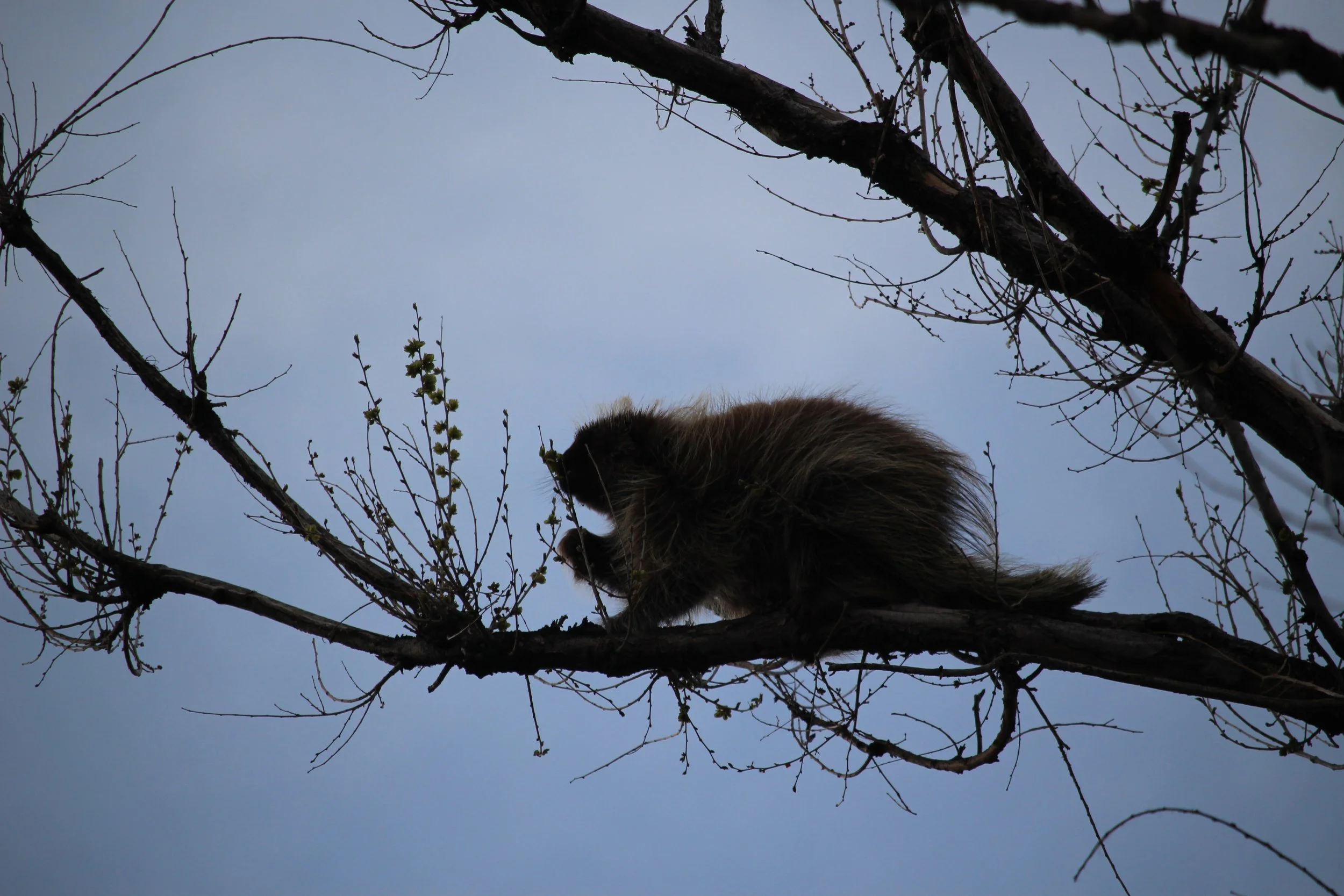
Whether you’re a person or a porcupine, you can be a good inhabitant of your watershed.
Last week, after my latest story about the Middle Rio Grande published, one question kept rolling into my email and across social media feeds: “What can we do?”
Well, there’s a lot to do. Here’s a list to get you started.
Pay attention.
Pay attention, Part 1a. This doesn’t mean doomscroll or obsess on social media. This means “pay attention to the news in your community and state by reading, supporting, and following trusted news outlets.” There are fewer local outlets all the time, but New Mexico has some great ones, including Source New Mexico, KUNM, and the Santa Fe New Mexican — all of which regularly cover environmental news. You can also subscribe for free to my Substack newsletter, which regularly links to local environmental news stories.
Pay attention, Part 1b. Are there reporters or news outlets regularly covering climate change? (To name a few: Bryce Dix at KUNM, Danielle Prokop and Patrick Lohmann at Source NM, and Jerry Redfern at Capital & Main.) Share fact-based stories widely. Let reporters (and their editors) know you value that work. At the same time, consider which news outlets don’t cover climate change — or do things like cover heat waves with no climate context. Let those editors, news directors, and publishers know that’s unacceptable. Ask them to do better.
Pay attention, Part 2. Go outside. Understand your watershed and be an active part of your neighborhood or ecosystem. Notice what’s happening, from day-to-day, season-to-season, year-to-year. You can be very serious while doing this. You can also have fun while doing this.
Pay attention, Part 3. Consider unlearning some things you think you know about water issues in the state. Understand how the Rio Grande Compact works and why. Understand Indian water rights and why they’re so incredibly important. Understand the upstream and downstream dynamics of rivers like the Rio Grande. Understand where your water comes from — and who makes decisions about your watershed. You should also familiarize yourself with state agencies like the Office of the State Engineer, the Interstate Stream Commission, and the Environment Department — and what they each do. Each of those agencies frequently lists public comment periods and other important events. Keep paying attention, learning, asking questions, and connecting.
Now, if you’re paying attention to what’s happening in the world around you, you’re ready to go on to the next step, which is communicating clearly and accurately to elected officials.
Vote. Then be an engaged voter.
Demand state legislators support bills related to climate change, economic diversification, reducing greenhouse gas emissions, and water planning.
Don’t only contact legislators during the session or when they’re moments away from voting on a bill. Write and call throughout the year, including when there are interim committee meetings. Go to their events and town halls and visit them.
Demand your state legislators pass budgets that adequately fund the state agencies listed above, as well as programs for river restoration, pollution control, clean water, water for rivers and ecosystems, and more.
If this feels overwhelming or you don’t know where to start with state government, learn about the New Mexico State Legislature.
Stay involved in local politics. Things like land use planning and water planning should be integrated with one another, yet in most places, they are not. Whether it’s your neighborhood, town or city, or county, you’ll have the most impact locally. (Getting involved locally also helps alleviate the despair and helplessness people feel about U.S. politics and world events.)
New Mexico’s federal delegation is full of smart, thoughtful people who understand climate change, public lands, and the state’s water challenges. And they need to hear that you’re concerned about climate change, water, and the state’s rivers.
Do something.
Get involved with a local nonprofit that already works on water and climate issues. There are so many. (You can Google them for yourself.) Many of them are on social media and have newsletters and they’re all constantly asking people to take various actions, ranging from volunteer projects to attending hearings to writing emails and making calls.
Do not talk yourself out of getting involved with an organization that already exists. (For real, there are so many.) You don’t need to agree with everyone. You don’t need to look like everyone. You don’t need to be the same age or gender or have the exact same opinions on every issue. You just need to show up, listen, learn, and act.
Look around your own yard and neighborhood. It’s time to make decisions. For me, that means trying to keep my trees alive, as well as the native flowering plants that birds and insects rely upon. It’s also critically important to put out clean, consistent water for wildlife. If you need help on how to make your yard healthier for wildlife, learn more from the New Mexico Backyard Refuge Program.
Create something.
There are countless creative ways to engage with rivers, forests, landscapes, waters, communities, and the world at large. Here in New Mexico, so many people, galleries, musicians, performers, and artists create environmental art. Be a part of or support those movements or create something on your own. Take photos of your beloved or suffering places and post them on social media. Write a letter to your elected leaders (local, state, and federal!). Take your friends to the river and read love poems. Sing a song to your forest.
Pray.
I used to get bent out of shape when interviewing someone about water challenges on the Rio Grande, and they’d say “pray for rain!” or “pray for a good monsoon!” I wanted those sources to articulate concrete solutions or actions.
These days, I have a different relationship to prayer.
For me, prayer is attention. I’m not asking for favors or intercessions. I am witnessing, giving thanks, pausing, and believing that there are better ways to love the Earth and one another.
I just read these lines in The Glorians: Visitations from the Holy Ordinary, a new book by Terry Tempest Williams:
From the vantage point of any community facing climate collapse, Earth is asking us to wake up and reflect on the implications that our conscious and unconscious actions are having on the integrity of life in all manifestations, large and small.
That makes sense to me, and that seems like prayer. And just as there are countless ways to create, there are many ways to pray.
“I'm a praying kind of person, Laura, so for those who are that way: pray for rain, pray for moisture,” Jason Casuga recently said to me, while talking about how the Middle Rio Grande Conservancy District is trying to handle this year’s irrigation season. “I don't think that's something that we should lose either. I know our tribal partners will be doing that. I will be doing that.”
I’m guessing some people who commented “what can we do?” were hoping for a quick action to “save” the Rio Grande from drying. There aren’t any quick actions. If there were, people would have gotten serious about the climate crisis decades ago.
Caring for a river — and for one another — takes time, hard work, and sacrifice. It also requires building relationships, learning about place and community, and taking some chances.
So, let’s go! ❤️
