Water security at ‘grave’ risk on the Rio Grande-Rio Bravo
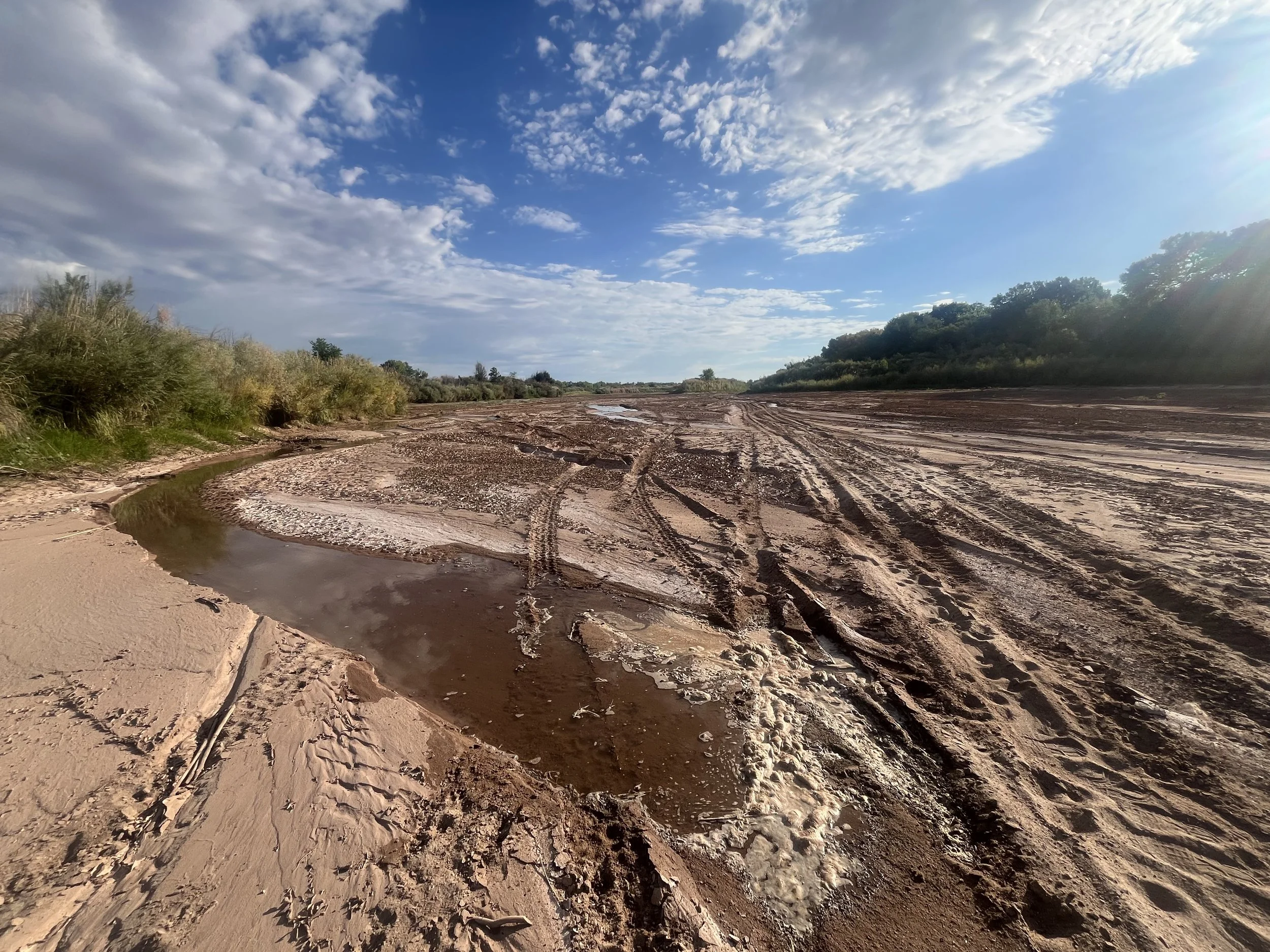
New study shows that 85 percent of the water used in New Mexico from the Rio Grande system is ‘fundamentally unsustainable.’ That doesn’t mean there isn’t water for the river itself, however.
Overconsumption along the Rio Grande-Rio Bravo is putting water security at risk, according to a study published late last year about the river system shared by Colorado, New Mexico, Texas, and Mexico.
The new study is the third in a trilogy. The first looked at how reducing irrigation for livestock feed is essential to saving Utah’s Great Salt Lake. And the second tracked water use along the Colorado River.
Together, they warn that the region’s water supplies are approaching a “danger zone,” says lead author Brian Richter, who added, “We really need to respond at a much greater level and much faster than the efforts so far.”
The new paper, “Overconsumption gravely threatens water security in the binational Rio Grande-Bravo basin,” looks at the entire Rio Grande-Rio Bravo Basin and estimates water consumption for individual crops in 14 sub-basins. The authors also tracked changes in reservoir storage and groundwater volume.
“About half of the water consumption in the overall basin is being supported by natural replenishment from snowmelt, rainfall, and aquifer recharge,” says Richter. But 52 percent of entire basin’s water use is unsustainable — that is, it’s drawing down both reservoir and groundwater levels.
It’s easy to see the basin’s drastically low reservoirs. But the authors found groundwater depletion in the Rio Grande Basin is even worse.
“We know that when surface water supplies, when river flows, are insufficient to meet all of the needs of all the various water uses that it's very, very common for farmers and others to start utilizing groundwater more heavily,” says Richter. “We were very surprised to see that it was as severe as it is — that it's 15 times greater than the loss of reservoir volume.”
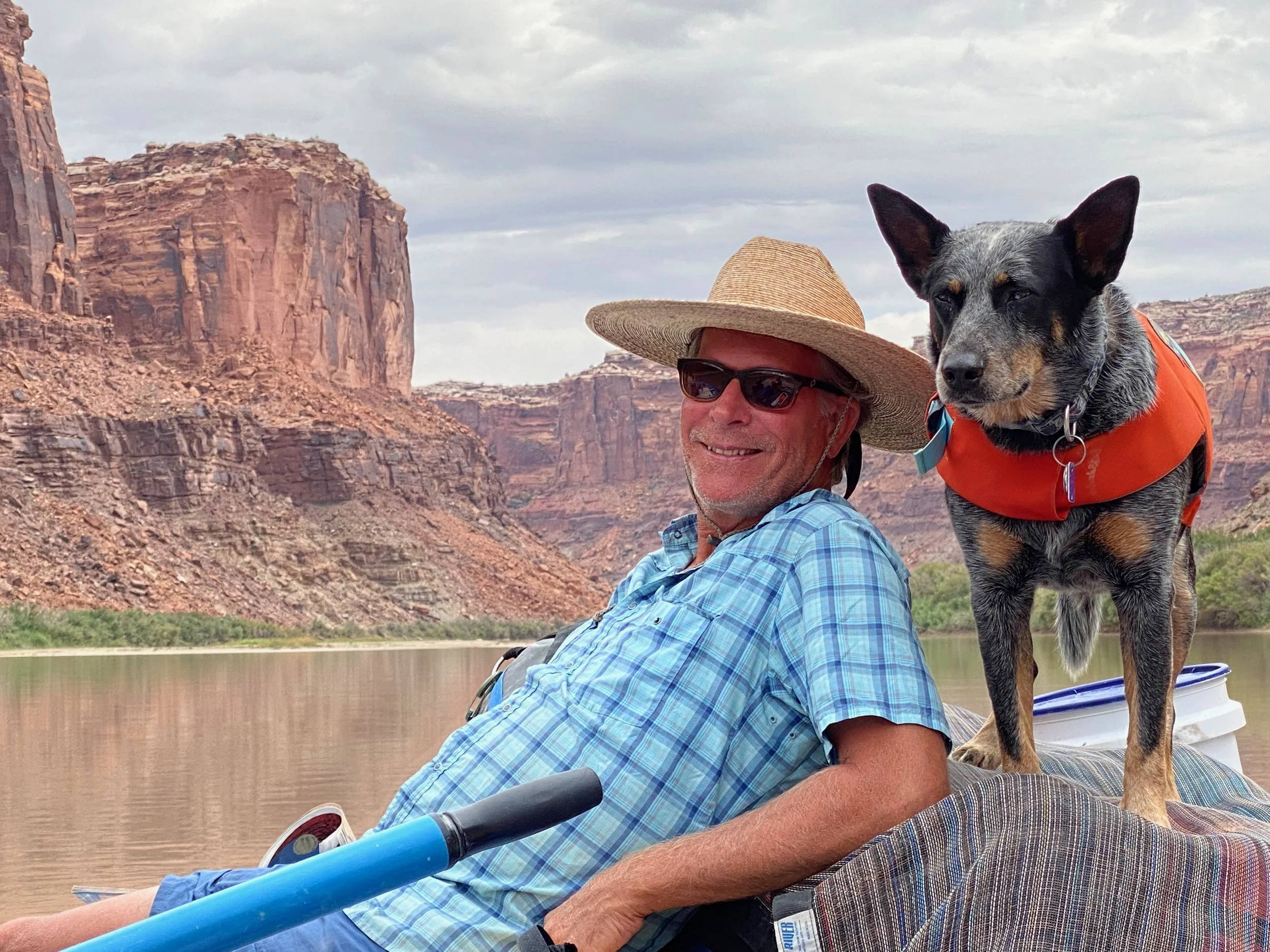
In December, Brian Richter spoke in detail about the study. Here's an edited excerpt of our conversation.
You and your co-authors write that farmers dependent on irrigation, and numerous cities, “face an existential crisis.” What is that existential crisis?
It's the very real possibility that we could be looking at some pretty severe water shortages — even greater than what they're already experiencing — in the coming years or decade.
Total water storage, for example, along the Rio Grande in New Mexico is now down to only 13 percent of its total full capacity.
It's very possible to drain the rest of that in just a couple of years. Even in just the next year or two, that storage water could all be gone, which means that you don't have that reserve supply that everybody depends on in addition to the annual river flow.
It’s wild to see the numbers for New Mexico in the study. That the “loss of reservoir storage has been most severe in New Mexico, where 71% of the reservoir storage that existed at the start of 2002 was gone by the end of 2024.” At the risk of being either really simplistic or way too complicated, what does that mean?
It’s important to say that it's not just the water users and water managers in the Rio Grande-Rio Bravo system that are experiencing this.
Everybody knows that the Great Salt Lake has been shrinking pretty dramatically over the last couple of decades and doesn't really seem to be turning around. As in the Rio Grande, things seem to still be getting worse rather than getting better. And then, everybody knows about the Colorado River system — and it's getting to be a pretty serious, precarious situation with Lake Powell and Lake Mead.
So, this is a regional phenomenon, it's a regional stress that is affecting very, very large numbers of people. It is affecting even our biggest cities in the western U.S. and of course, in the Southwest it is particularly severe.
It should give us all pause, but it should also sound the alarm bells — that we really need to think about our future now in a fundamentally different way.
We’re going to need to push water conservation in the urban areas as hard as we can. [Here, Richter acknowledges water conservation work in cities like Albuquerque, Santa Fe, and Salt Lake City, noting that many big cities are accommodating population growth while lowering water use.]
But I think, looking forward we're really going to have to think about how much agricultural land are we going to be able to continue to irrigate in a basin like the Rio Grande?
And if less land can be irrigated, what would be the optimum mixture of crops that would be beneficial to the farmers, the communities, and to the broader state economy? We just haven't had the conversations that we need around that, at least not as aggressively and intentionally as I think we're going to have to.
You’ve done a lot of work around environmental flows for rivers. [In 2023, Richter co-authored the paper, “Opportunities for Restoring Environmental Flows in the Rio Grande-Rio Bravo Basin Spanning the US-Mexico Border.”] Where does the environment itself fits in to into all of this?
Unfortunately, a lot of folks think that trying to sustain a healthy environment adds an additional burden onto these water management challenges. That can be the case in some situations. But what I've seen in four decades of work all over the world is that if you consider the environment’s needs in a fully integrated way — simultaneously planning for all of the other human needs for the water — you can find ways to address all of those needs, oftentimes in a successful way.
For example, the state of New Mexico is required to deliver a percentage of the annual water flow in the Rio Grande to its downstream neighbor of Texas. There is a requirement for water to move through the river system from the Colorado line down to the Texas line.
We can also address a lot of the environmental flow needs by thinking about how we deliver that water. In other words: during what time of year do we allow that water to move down through the river system so that it’s not only meeting the [Rio Grande] Compact requirements but it's also meeting ecological needs? How are we timing it so that it's the greatest benefit to cottonwood bosques and the fish and other aquatic life that depend upon the river?
We have to move the water downstream anyway, and if we think about doing that in the most creative and the most ecologically-supportive way possible, we might be able to get a lot of things done simultaneously.
Did anything in this particular study surprise you?
I was surprised that things are as bad as they are.
I was paying attention to the fact that the farmers weren't getting a full growing seasons worth of water allocation and that many of them [in the Middle Rio Grande] were getting cut off in June [instead of being able to irrigate through September and October]. I've been watching the water level in some of the reservoirs like Elephant Butte, and it was getting frightening to see the water level dropping as low as it was. But until we put all the numbers together and did that calculation on the magnitude of the overconsumption, that really surprised me.
There's no way I would've imagined that 85 percent of the water used in New Mexico from the Rio Grande system is fundamentally unsustainable. That’s mind-boggling. Even when you extend it to the whole basin and you say, 50-50: Half of it is not sustainable, half of it is being naturally supplied, naturally replenished.
We were also a little bit surprised to see that out on the irrigated farms that “cattle feed crops” had become so dominant in the last couple of decades.
[Richter talked about some of the reasons for this, including that farmers are aging, the cost and availability of farm labor for crops like green chile, and unreliable water supplies.]
The news media tends to headline an insatiable demand for beef, which is all true. [Americans] are off the charts compared to other countries, so yes, we are eating a lot of beef.
But we peeled back the layers of the onion [and learned that a lot of the alfalfa over the last couple of decades] has been going to dairy farms. Then, you see that one of the strongest drivers of the increase in dairy production in the U.S. has been yogurt consumption — a 220% increase in yogurt consumption.
With this study, what can't you say or what don't you know? Or, what is the next big question everybody should be asking?
The biggest question confronting us now is ‘What are we going to do about this water crisis?’ Because there are no easy fixes.
One of the most important things that I learned over the course of my long career was that the scientists and the technical experts and the engineers can come up with strategies or solutions that seem to be perfectly plausible, that seem to be sufficiently profitable — and yet oftentimes those solutions don't end up getting implemented or implemented at the necessary scale.
And the reason is we don't understand the psychology, the sociology of these communities of water users, and particularly of the farming communities. So, to presume that you have an answer for the farmers is a fool’s errand, particularly if you're not a farmer. And if we're not hearing from them, the chances of being able to implement solutions that are going to be durable and successful is going to be very, very limited.
Anything else you want to emphasize?
What we're seeing in the Rio Grande, and in many of these other river basins in the Southwest and in the western U.S. overall, is that climate warming is reducing the amount of water available for us to work with — the water for humans to use and the water to support natural ecosystems.
And what we're seeing now in the 21st-century is the failure to adequately respond to that reality.
In the paper, we estimated something like 17 percent lower flow coming into the Rio Grande system as compared to last century.
While there are some who think that we're just in a particularly wicked dry spell here, of 25 years, there’s solid scientific evidence to suggest that this is part of a longer term aridification, and we should not be expecting water availability to go back to what it was in the last century. We just haven’t been able to adapt and respond swiftly enough to get out from underneath this threat.
And so I think that's the conundrum that we're facing: we are now going to have less water than we did in the last century, and we have to figure out how to adapt to that.
