For decades, New Mexico’s Lower Rio Grande has been ‘dry by design’
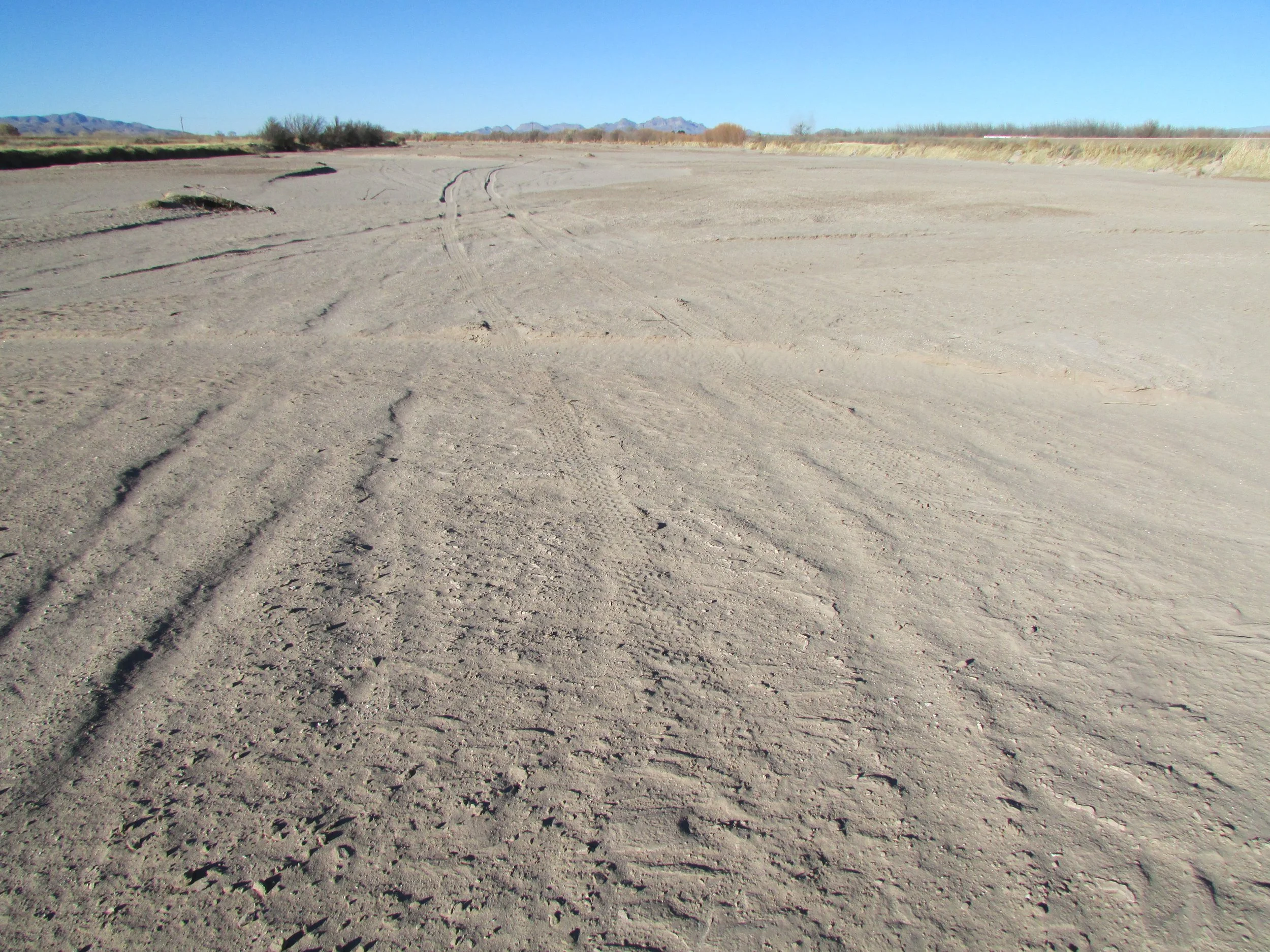
New Mexico’s rivers lack rights to their own waters.
But it doesn’t have to be that way.
New Mexico Wild’s Tricia Snyder says the state has useful tools in place.
They just need to be better organized.
And better funded.
Every river is different, and sometimes it’s tricky to see what’s harming a particular stretch. Are there invisible toxins or bacteria, for example, or an invasive fish outcompeting natives?
There’s no mistaking what’s wrong with the Rio Grande in southern New Mexico.
“That stretch of the river is what brought me to water work,” says Tricia Snyder, who grew up in El Paso and began her conservation career in Las Cruces: “Living next to a river that is dry by design for months out of the year — and wondering why that was so, and also wondering, ‘Who gets to make those decisions? Who gets to be involved in those choices that affect us all?’”
Since the early twentieth century, the Rio Grande in southern New Mexico and West Texas flows only when managers release water from Elephant Butte and Caballo reservoirs. During irrigation season, water chugs between levees to reach downstream users. Once the tap closes, the stretch through Hatch, Las Cruces, Mesilla, and El Paso dries — save for short spans where wastewater treatment plants pour water into the channel.
“I argue that the ‘Forgotten Reach’ starts up that high (in southern New Mexico),” says Snyder, who is the Rivers and Waters Program Director at New Mexico Wild.
The “Forgotten Reach” of the Rio Grande begins about 80 miles downstream of El Paso at Fort Quitman, Texas. For 199 miles, the dry channel is plugged with sediment and overgrown with salt cedar — until Presidio, where the Rio Conchos joins from Mexico, nudging the Rio Grande along the border and toward Big Bend National Park and eventually, the Gulf of Mexico.
Before the U.S. government built Elephant Butte and Caballo, as well as a handful of other dams and reservoirs, the Rio Grande below El Paso “generally experienced biannual seasonal flows,” according to a 2008 U.S. Army Corps of Engineers report, which notes that the Forgotten Reach ran with snowmelt from April through June and flash flood waters from arroyos in the summer. Before the dams, the river ebbed and flooded from year to year, and in the 1880s and early 1900s, the Rio Grande in what’s now called the Forgotten Reach was “navigable for 100-150 ton keelboats from a point approximately 147 miles below El Paso.”
Over the past few decades, river drying has crept higher up the watershed.
Since the late 1990s, the Middle Rio Grande above Elephant Butte Reservoir has often during irrigation season. In 2022, the river briefly dried in Albuquerque, and this summer, the river through New Mexico’s largest city was dry for about 50 days.
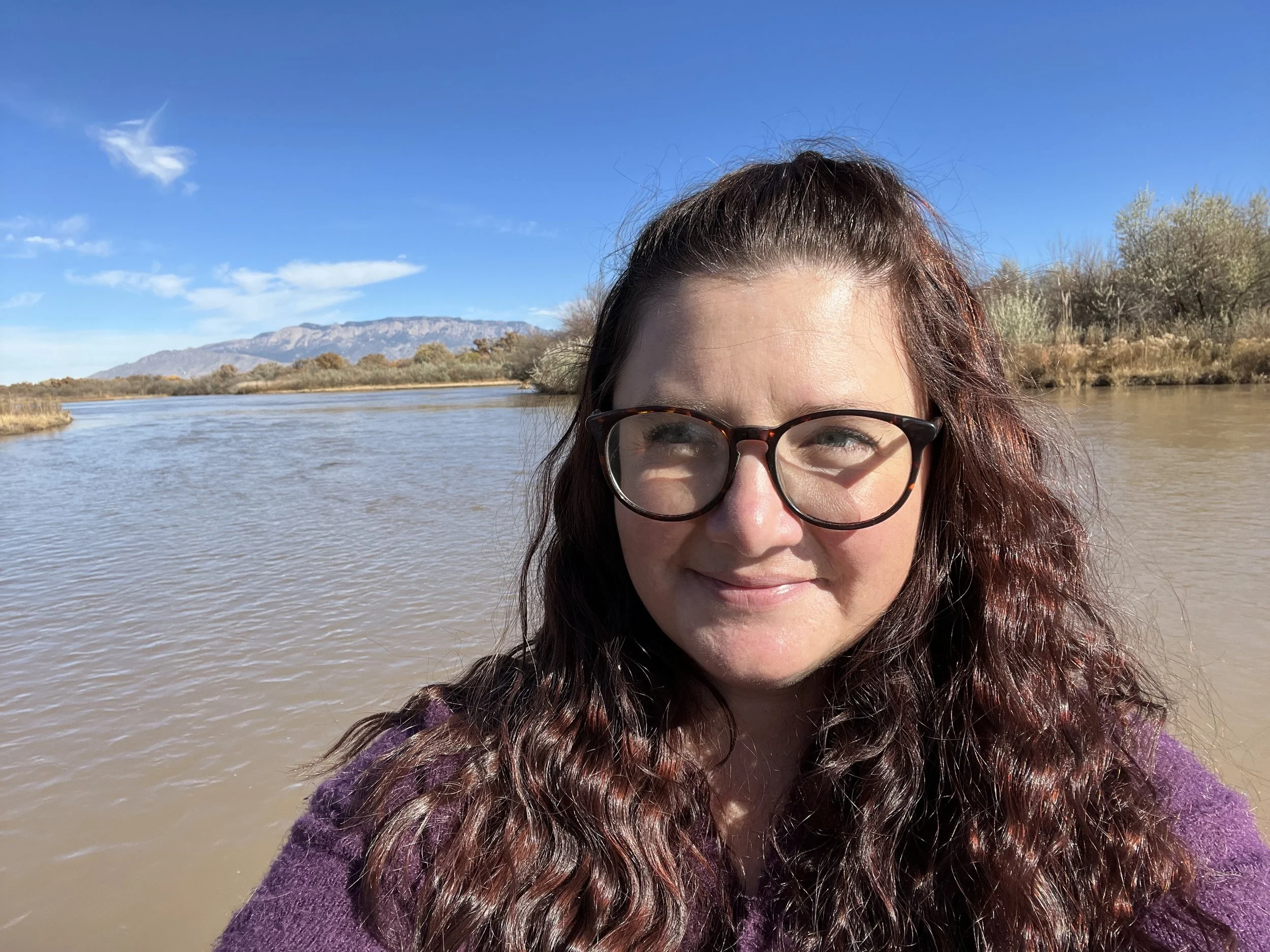
“Every drop of water and then some is promised to somebody — and we're staring down a hydrologic reality that we’ll have significantly less water in the future,” says Snyder.
Currently, New Mexico’s rivers lack rights to their own waters. But Snyder says the state has useful tools already in place. They just need to be better organized. And better funded.
First, there’s the Strategic Water Reserve. The state can use that water to benefit rare species, comply with the Rio Grande Compact and move water to downstream users, and benefit groundwater supplies.
“We’ve also seen a couple of instream flow permits, shepherded by folks like Audubon Southwest and Trout Unlimited, where they’re keeping water in the river for the purpose of environmental flows,” she says.
Snyder also thinks the state’s 19-year old Active Water Resource Management Initiative could be better leveraged to benefit the environment.
That initiative allows the New Mexico State Engineer flexibility during drought within certain river systems, especially those that are unadjudicated. “We’ve seen some success with that in developing shortage-sharing agreements between different parties in places like the Chama (River),” she says. “And there are a lot of other places in the state where we could be thinking about how to use that framework and bring an environmental lens to it.”
The state could use these existing strategies and initiatives to create a system that supports environmental flows. “We have all these tools, but they’re scattered around the shop,” she says. “We need to bring them together into a real toolbox so we can identify what’s the right tool for the job but also see what might be missing — and what new policies we need to enact and incorporate to better think about these issues.”
All this requires funding, which the New Mexico Legislature traditionally skimps on when it comes to water and conservation. Even when good policies exist, or state agencies have mandates to act on conservation or environmental measures, the legislature often fails to fund the work.
Ahead of the upcoming 30-day session in 2026, when legislators will focus on the state budget — versus broad policies or hot-button issues that capture the public’s attention — constituents should reach out to their legislators.
“Folks can be making sure that their legislator knows that water is an important priority for them, and in particular, ask them not to forget about the needs of the environment, and be thinking about water management in that holistic way of using every single drop,” Snyder says.
In the past, conversations in the Middle Rio Grande or the Pecos River sometimes pivoted around “fish versus farmer” rhetoric, particularly in the early 2000s when agencies and stakeholders were first grappling with Endangered Species Act compliance for the endangered Rio Grande silvery minnow and the Pecos bluntnose shiner.
Today, those divisions aren’t practical, and it’s obvious that dry rivers don’t benefit farmers or cities. Facing the threats of climate change and overconsumption, New Mexicans “don’t have the luxury of those kinds of battles anymore,” Snyder says.
Federal agencies are collapsing, and regulations are being eliminated or rolled back. There’s also less federal funding for collaboration, restoration, and environmental and public health protections. And the state’s rivers are running out of time.
But rather than backing away from river protections, Snyder says that it’s time to re-envision water management. Human, wildlife, and river communities are all part of the same “tapestry of life,” she says. “If we try to walk away from that, well, that's how we ended up in the situation that we're in now.”
