‘The river was never meant to sit the way it does behind the walls of these dams’
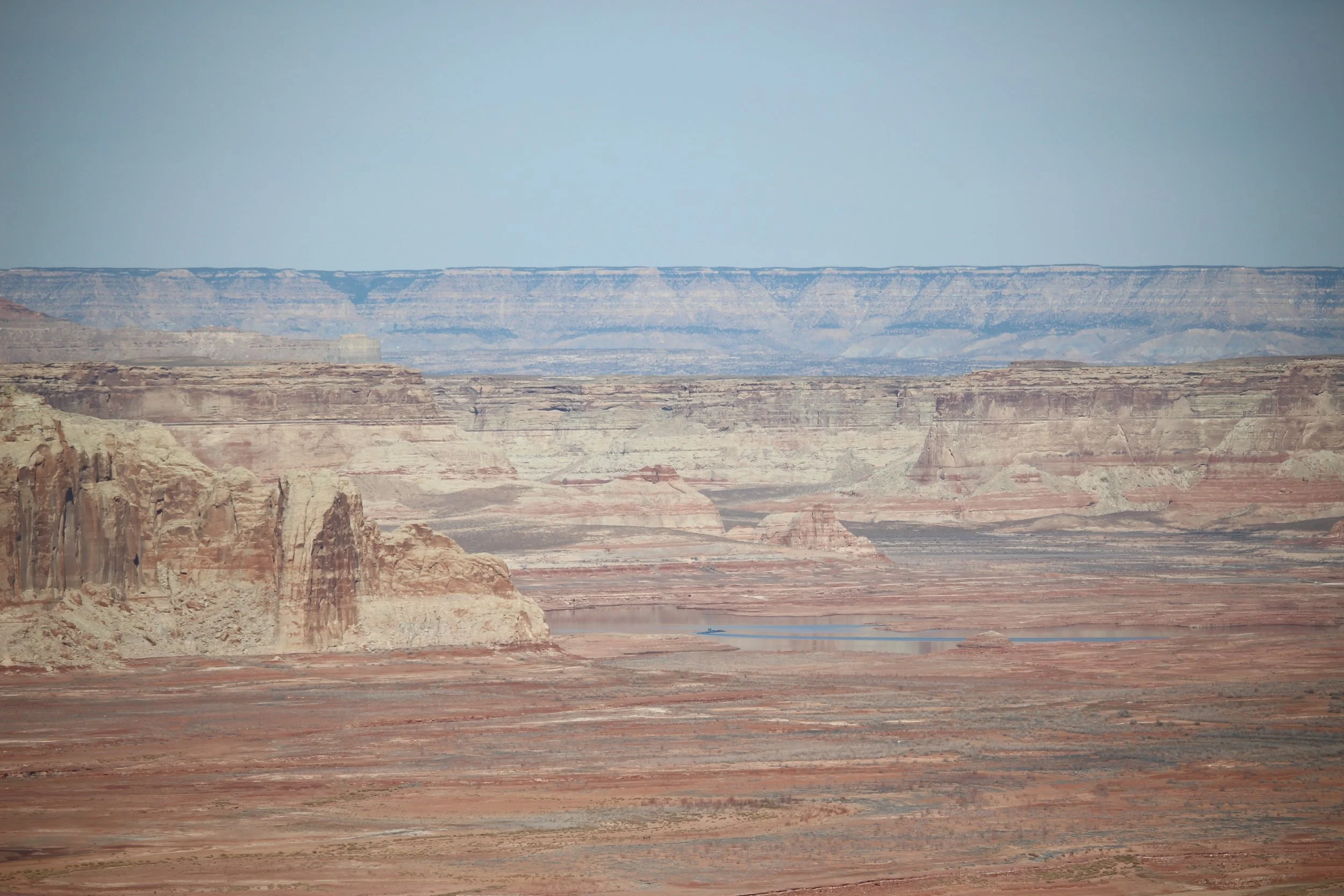
Like I wrote over at Source New Mexico last week, the Rio Grande is my home river. But the Colorado River watershed also feeds places like Santa Fe and Albuquerque, where I live.
Anytime I think of the massive infrastructure on the Colorado River (or any river), I recall a conversation four years ago with Andrew Curley, a Diné geographer and professor at the University of Arizona’s School of Geography, Development & Environment:
The Colorado River’s crisis far predates climate change, Curley said: For Indigenous people, the crisis occurred when Anglo settlers and farmers colonized the lands and staked claim to the river. The crisis happened when the U.S. government and states divided the waters of the Colorado amongst themselves, building the infrastructure we see today, like dams, concrete canals, tunnels and (drying) reservoirs.
“If you take it from an Indigenous perspective, if you take it from the Navajo perspective, the Diné perspective or Hopi perspective, you’re going to see that the [Colorado] River has been in crisis for quite some time, going back to these first incursions into the region, going back to the construction of the Roosevelt Dam along the Salt River,” Curley said. “Once the colonialists came in and started to dam the river and change the ecology, that’s when the river started to go into crisis.”
And it’s impossible to divorce colonialist infrastructure from climate change: “The river was never meant to sit the way it does behind the walls of these dams,” Curley said.
People are rightfully worried about water supplies on the Colorado River, but warming, aridification, and overconsumption are even more troubling on the Rio Grande. (Just a reminder that the Middle Rio Grande isn’t even adjudicated.) I know I’m always sharing these numbers, but let’s just look again at reservoir levels on the Rio Grande and its tributary, the Rio Chama.
Currently, Elephant Butte Reservoir is 12 percent full and Caballo, seven percent. Abiquiu Reservoir is at 61 percent capacity. El Vado Reservoir is 12 percent full and Heron Lake, seven percent. Right now, Heron is at its lowest level since being filled in 1971.
None of these lakes will rise in significant ways anytime soon. According to the March 12 drought update summary from the National Integrated Drought Information System, the headwaters of the Colorado River and the Rio Grande are both in record “snow drought.” Both river basins also experienced their warmest December to February periods on record.
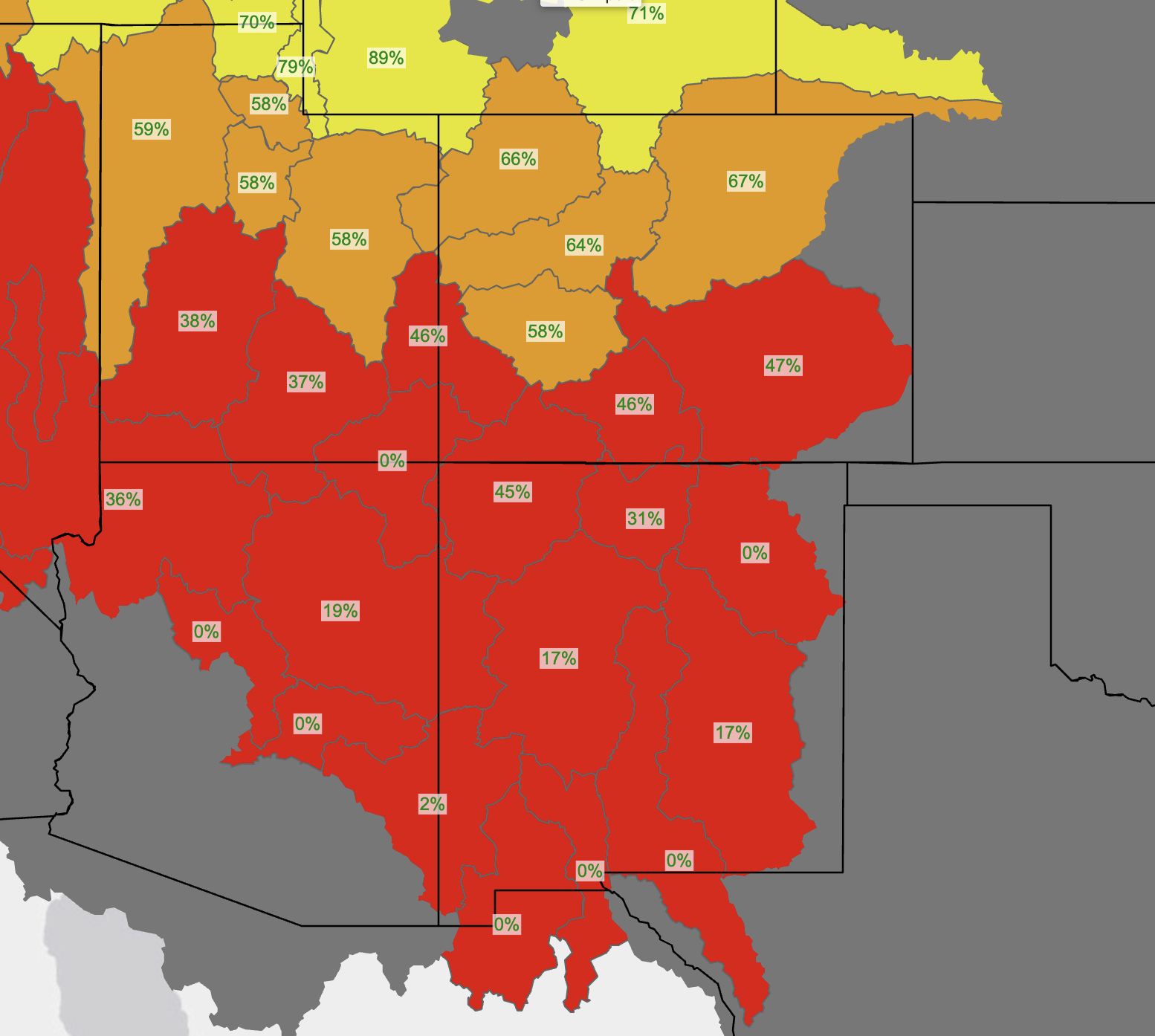
The headwaters of the Colorado River and the Rio Grande are both in record “snow drought.”
And both river basins also experienced their warmest winters on record.
Read the Drought.gov drought status update for March 12 online here.
