Reinhabiting a River
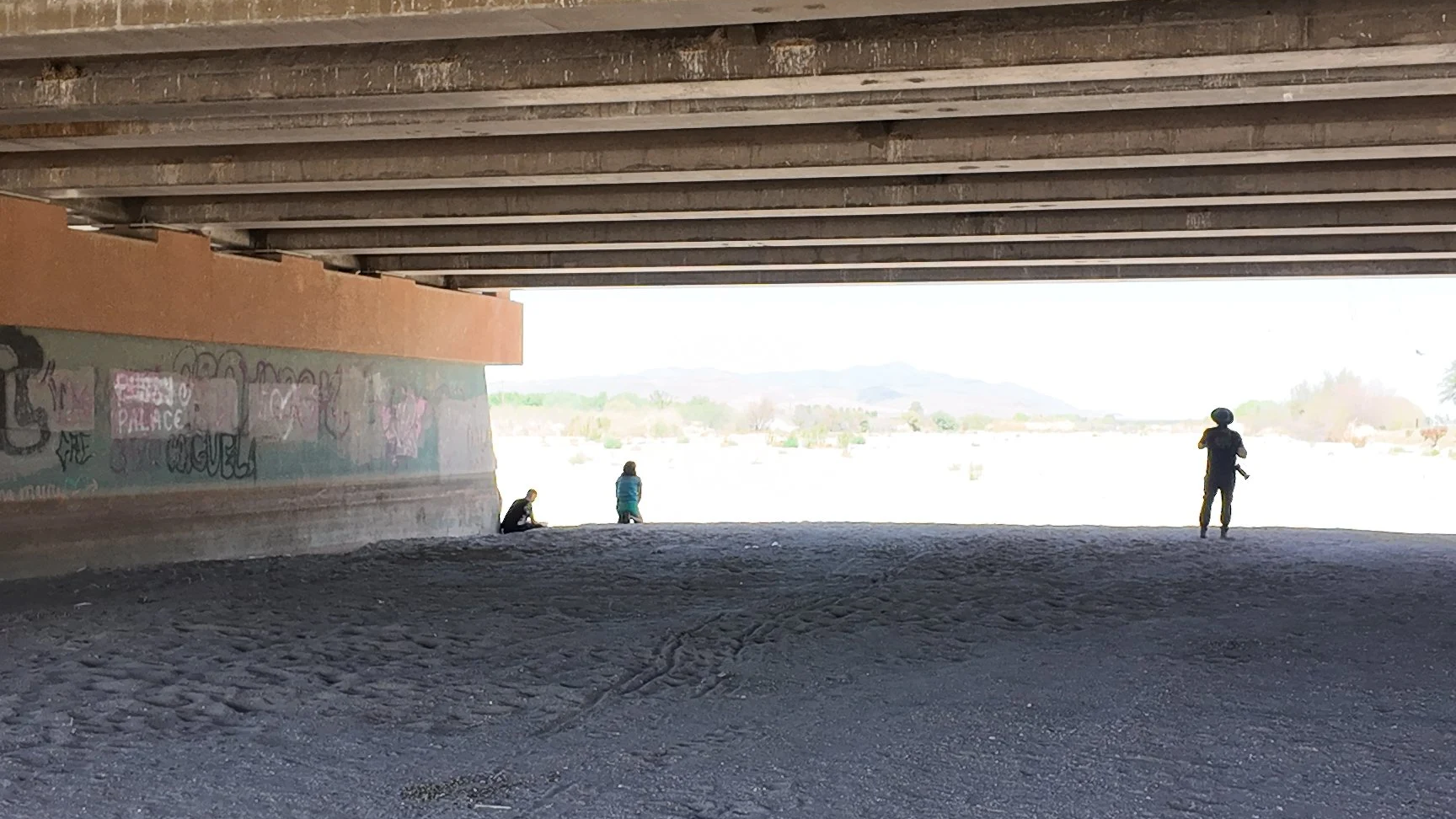
At the end of May, southern New Mexicans welcomed back the Rio Grande.
At the end of May, my daughter and I headed to southern New Mexico to witness the Rio Grande as the U.S. Bureau of Reclamation released water out of Caballo Dam for cities and farmers downstream. (Just a reminder about that water released from reservoirs into the lower Rio Grande: 57 percent goes to New Mexicans, 43 percent to Texans.)
There are many things I could write about — water rights, Texas v. New Mexico, dams and reservoirs, the engineering of a river channel, pecan orchards, how storm water capture starves the river of its flows — but for right now, I just want to recall water reinhabiting a channel that had been dry since late last summer.
As the water was estimated to approach Las Cruces, people gathered at La Llorona Park. When the river appeared on the horizon, motorcyclists and drivers pulled over on the bridge. There were families, drummers, young people tossing footballs, and plenty of swallows. People prayed, floated, laughed, and played. They talked about water, made new friends, and hugged one another.
In more than 20 years of reporting on the Rio Grande, I’ve never felt such a powerful swell of love and community for the river’s waters.
When it comes to our rivers, we can fight and snipe at one another. We can spread misinformation or bury our heads in the sand. We can think that water challenges are too great or complex and leave them to someone else to consider.
Or we can listen to what our rivers and floodplains are telling us. We can all work together, in hardship and with joy to embrace a better future. And if you haven’t already read it, please find Clark Tenakhongva’s piece in High Country News: “Treat water like family, not profit.”
