While the Rio Grande dries, NM backs down on water protections
The Rio Grande in Albuquerque is going to start drying pretty soon.
Already, more than 35 miles are dry in the San Acacia reach and another ten miles are dry in the Isleta reach near Peralta.
This short video shows what it looked (and sounded!) like at about 100 cubic feet per second in Albuquerque on Tuesday morning. I adored listening to all the yellow-breasted chats and warblers and so many others. And my heart breaks to think of how the drying affects all the birds and other wildlife that live in the river and the bosque.
Downstream, at the Central Bridge in Albuquerque the river is at only 43 cubic feet per second. You can see how that compares to other years:
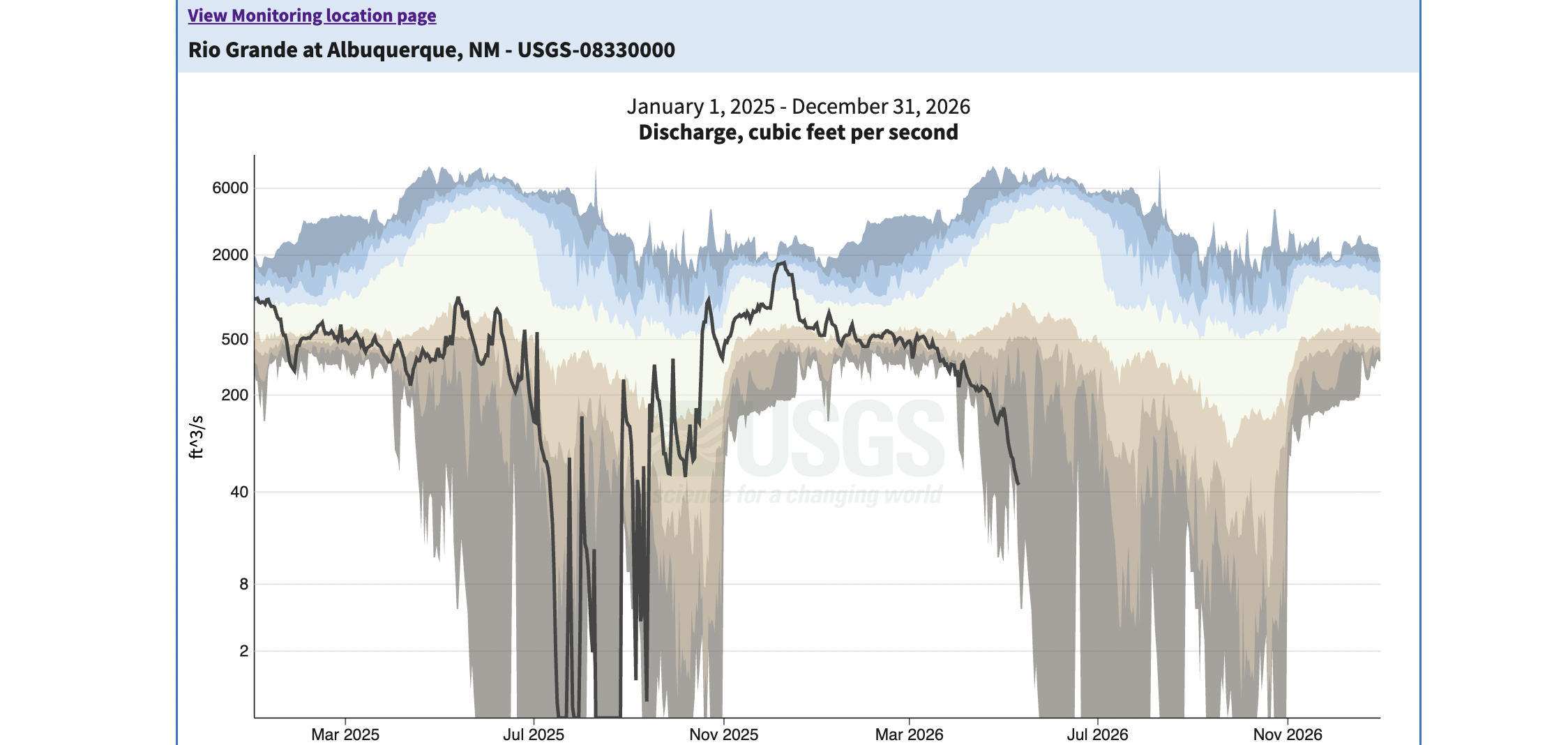

Quite extraordinarily, given our extreme and long-term water crisis, I just heard that the New Mexico Water Quality Control Commission accepted a petition from the oil and gas industry to start a new rulemaking process. If adopted, the new rule would allow waters polluted by oil and gas operations to be released into surface and ground waters — and be used for growing crops.
The state and the oil and gas industry call this “produced water,” and in the Permian Basin, drillers “produce” between four and 12 barrels of wastewater for every barrel of oil.
According to a press release from the Western Environmental Law Center:
Produced water is a toxic soup of chemicals that the WQCC concluded less than a year ago in a prior rulemaking could not be treated to levels safe to discharge into the state’s waters. The existing rule banning produced water discharge went into effect 10 months ago and is available here. As written, the new industry-proposed rule would be one of the most permissive rules on oil and gas wastewater discharge nationwide.
Now, go outside. Take care of your trees, and put out fresh, clean water for birds and other wildlife. They need your help.
