Being ‘up to the task’ of meeting NM’s water challenges
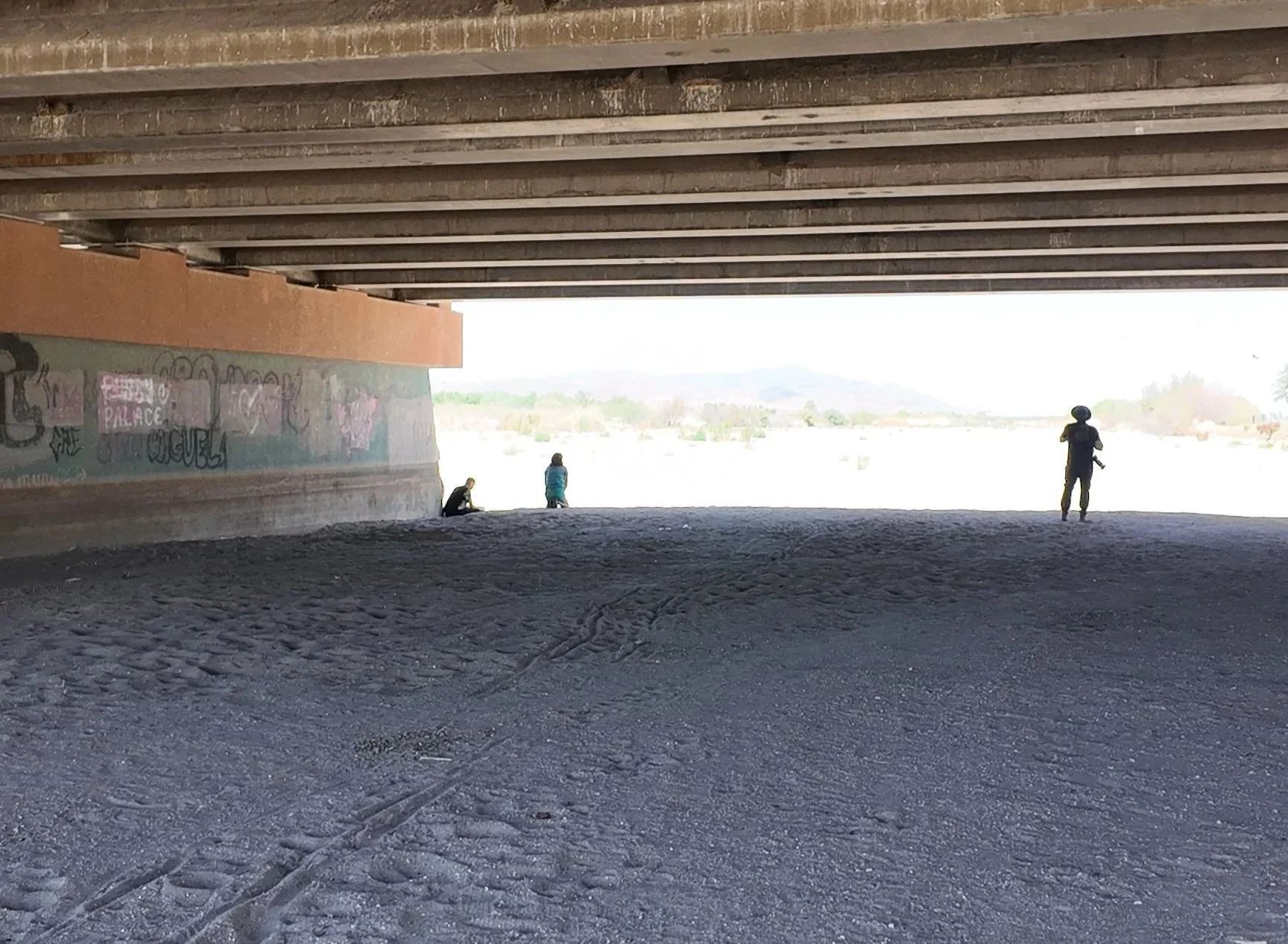
In southern New Mexico this spring, people waited for the Rio Grande to arrive in Las Cruces.
Last week, the New Mexico Interstate Stream Commission convened its regular meeting in Las Cruces, touring the Fillmore Dam Site, Leyendecker Research Center, and a brackish well site in Santa Teresa.
Commissioners and staff also met Friday to tackle everything from contract approvals and amendments to the design of a water rights purchase program in the Lower Rio Grande to satisfy requirements of the Texas v. New Mexico and Colorado settlement. (Under the Rio Grande Compact, New Mexico’s total accrued debit status for 2026 is 132,000 acre feet — and Article VII restrictions remain in place.)
As part of that settlement, New Mexico needs to permanently reduce groundwater depletions in the Mesilla and Rincon aquifers between Caballo and the El Paso gage by 18,200 acre-feet per year by June 2036; presumably, to avoid punting the process, half that amount must be retired by June 2031.
Buying out the water rights is complicated, and the state hasn’t figured out all the details yet. But New Mexico plans to buy agricultural, commercial, municipal, or industrial water rights from voluntary sellers in the Lower Rio Grande and then permanently retire the water rights.
The estimated cost? More than $150 million. Right now, there’s $40 million of federal money available, and in 2026, the New Mexico Legislature approved a $22.5 special appropriation.
The state is still designing the purchase program and needs to figure out a ton of long-term details, including how the water retirements will be monitored, enforced, and communicated to future landowners.
The ISC plans to hold public meetings about the Lower Rio Grande program in early December. And at their next meeting, commissioners expect to take action on the final purchase program design as well as the New Mexico's Water Security Planning Act guidelines.
Middle Rio Grande and a future ‘water master’
September’s storms bumped river flows, causing flooding in many places. (And the state’s going to see more wet weather this week…) In the Middle Rio Grande, flooding damaged infrastructure in the San Acacia Reach, and in late September, the Low Flow Conveyance Channel overtopped near Fort Craig.
On September 28, according to the ISC report, “high sediment and water flows in Brown Arroyo to the west of the river entered the Socorro Main [Canal] and LFCC leaving significant damage to those canals as well as surrounding farms, homes, roadways, and railroad tracks.”
This stretch of the Middle Rio Grande has undergone widespread and deep environmental change since large-scale diversions for irrigation began upstream in the late 19th and early 20th centuries — and since engineers wrested the river’s water from its natural floodplain and channel into the Low Flow Conveyance Channel beginning in the 1950s.
Built with the stated goal of moving the river’s water more quickly into Elephant Butte Reservoir for delivery downstream to southern New Mexico and Texas, the 70-mile long Low Flow Conveyance Channel carried the entirety of the river’s flows for most of the 1960s and 1970s. In the mid-1980s, sediment aggradation from the upper reach of the reservoir and into the channel rendered the engineered channel unusable. Even when it wasn’t operational, it still pulled groundwater and “return water” from farms, running even during summer months when the natural river channel was dry.
Once again, the state and federal governments are putting money and study into the Low Flow Conveyance Channel, and considering its future uses and benefits. (And hopefully not considering twenty first century answers to current and future challenges. But that’s a post for another day.)
Meanwhile, according to the state, District 1 staff are working on a draft order “designating the Middle Rio Grande as a priority basin under Active Water Resource Management (AWRM) and designating the Middle Rio Grande Water Master and appointment of a water master for the District.” At Friday’s meeting, State Engineer Elizabeth Anderson said the water master appointment order is under review by the executive and legal team and should be signed and issued in November.
On Monday morning, I emailed a list of questions to the ISC/OSE, including about how that upcoming Middle Rio Grande metering order will work. I’m looking forward to understanding this better — and finding out how it will help the river as well as irrigators and compact deliveries.
Because, yes, there were floods in September. But on Sunday the San Acacia stretch of Middle Rio Grande “disconnected,” and 20.8 miles were dry. Over the weekend, the Middle Rio Grande Conservancy District was delivering water to irrigators (many of whom still had fields flush from the rains), and water managers were allowing just enough water into the river to keep the Isleta reach connected.
OSE Project Jupiter update
At October’s ISC meeting, Office of the State Engineer General Counsel Nat Chakeres also walked commissioners through a brief history of water rights for Project Jupiter, the data center Open AI and Oracle are building in southern New Mexico.
“We’re not allowing a new water right or new depletion,” he said, specifically addressing the agency’s authorization of an emergency replacement well in October 2025.
That replacement well isn’t Project Jupiter’s primary well, according to Chakeres, who said the companies estimate they will use 750-acre feet of water for the construction phase.
Although the state authorized the newly drilled well, it hasn’t scheduled a hearing to determine if the “emergency” meets state criteria for a well to be re-drilled. There have been 30 protestants, but, said Chakeres: “We don’t have as much staff as we’d like (to go through all the protestants concerns yet).”
During a hearing, if the state finds that a water rights owner hasn’t met the criteria for emergency well replacement, he said, there are remedies — including curtailment of water use or repayment.
This summer, the Center for Biological Diversity called the state engineer’s emergency authorization “illegal” and filed a petition for a writ of mandamus, in the New Mexico Supreme Court, which issued a temporary stay and then denied the petition.
“I think we can all be supportive of farmers getting a replacement well in an expedited manner, if they have a water right,” Interstate Stream Commissioner Paula Garcia said during the meeting, adding:
I appreciate that the OSE is being vigilant, and they're working with the rules the best that they can. But we also need to be reflective about whether those rules are working for us, and whether those rules are working for the people of New Mexico. When there's a great concern in a community about something, we should really scrutinize and ask a lot of questions.
The state should also scrutinize how water policies can be “misused by a powerful industry to get a quick water right,” said Garcia, who is executive director of the New Mexico Acequia Association.
An environmental engineer from the Pueblos of San Felipe and Cochiti, Commissioner Phoebe Suina hopes New Mexico agencies aren’t being short-sighted. “I expect future generations of my family to be in New Mexico for many, many, many, many years to come. And I’m coming with the perspective that over time, things have evolved,” she said. The climate has changed, the state is more arid — and systems need to evolve to address challenges people didn’t experience a century ago, she said: “When I look at a point of diversion map from 100 years ago, it is very different from today. And as I look at that point of diversion map, the uses of water are very different than 100 years ago.”
Suina commended the collaboration between the Interstate Stream Commission and the Office of the State Engineers and hopes that continues as “we want to effectively and sustainably manage our precious water resources for the state of New Mexico, our precious rivers, and our precious flows, both surface and subsurface.”
The state needs to understand the changes and evolve systems to address those changes, including looking at “water quality considerations, of water abuse,” she said. “I'm not trying to open up a can of worms here. I just want to say it's a multifaceted task that the state of New Mexico — and those of us living today — have to really look at and consider.” She added:
In my history, and my culture, and my understanding, when we look myopically at a decision — although the system may say, ‘Yes, you've checked all the boxes.’ — sometimes there is a realization over time that we need to consider a more complex analysis. And I think that’s where we are as New Mexicans living today, trying to figure that out. And I just hope that we all are up for the task of figuring that out.
As Garcia and Suina spoke, they reminded me of a conversation the night before with water attorney Martha Franks. Beginning in 1985, Franks worked as Special Assistant Attorney General with the Office of the State Engineer. Among other things, she was involved in the creation of New Mexico’s Active Water Resources Management Program.
During her presentation for the New Mexico Water Advocates, Franks spoke of how much water policy has changed in New Mexico since 1985 — and how “water is the medium through which change occurs.” To meet the coming challenges of the next few decades, she said: “We need more science and more reverence in how we behave toward water.”
